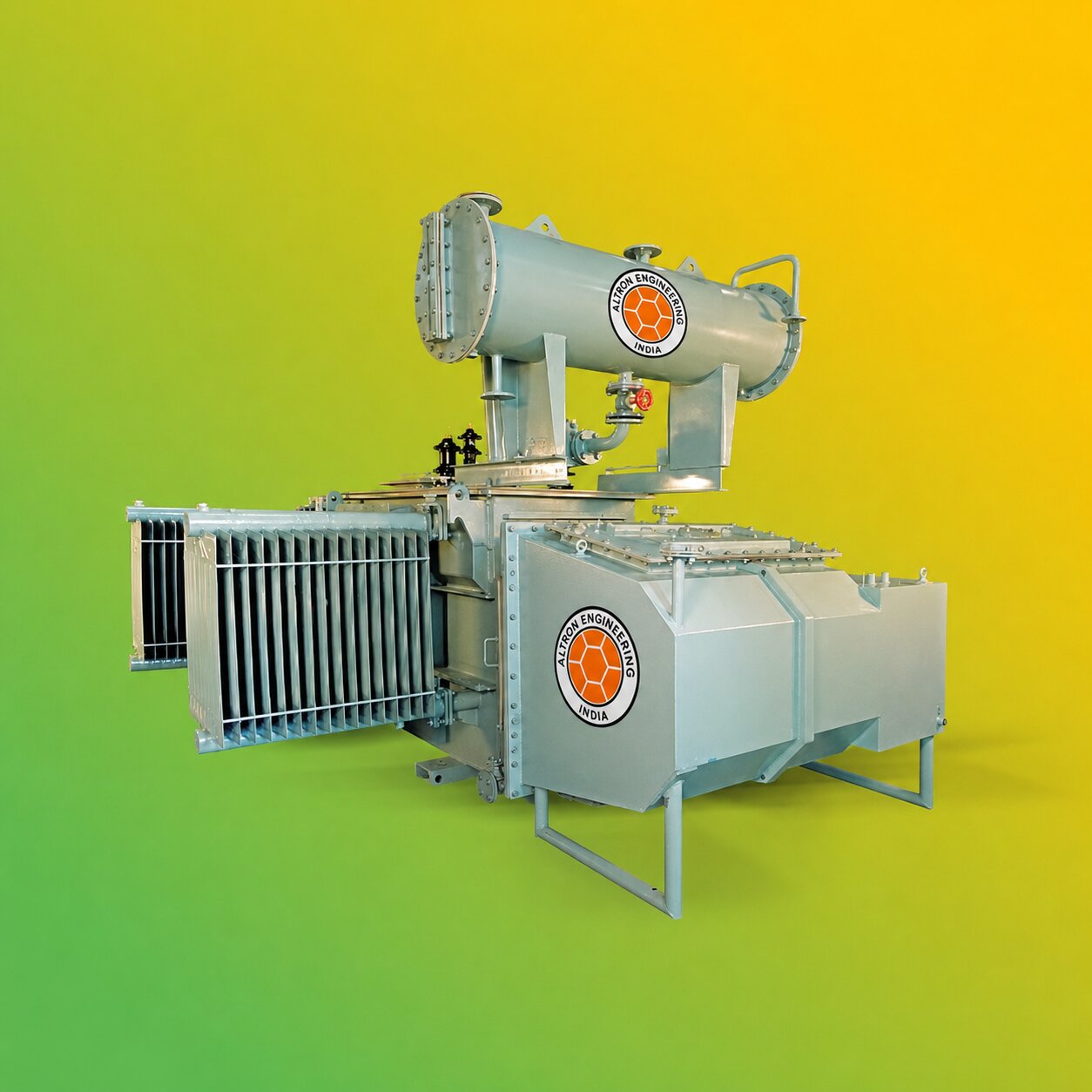
Choosing the right transformer is an important decision for any industrial electrical system. A transformer must be capable of handling the required load, voltage, operating conditions, and environmental factors while providing reliable and efficient performance. The right selection can help maintain stable power supply, reduce unnecessary losses, support equipment performance, and improve the overall reliability of an electrical system. But how to choose a power transformer for a specific industrial application? The answer depends on several technical factors, including transformer capacity, voltage requirements, load characteristics, cooling method, installation conditions, and application. This guide explains the key factors you should consider when selecting an industrial power transformer.
What Is a Power Transformer?
A power transformer is an electrical device used to transfer AC electrical energy from one circuit to another while changing the voltage level according to system requirements.
Power transformers are commonly used in:
- Manufacturing plants
- Steel and metal industries
- Cement plants
- Chemical industries
- Power generation facilities
- Solar power projects
- Large commercial installations
- Electrical substations
Since every application has different electrical requirements, selecting a transformer should be based on the actual operating conditions rather than simply choosing a particular capacity.
Why Is Proper Transformer Selection Important?
Selecting the correct transformer is essential for the safe and reliable operation of an industrial electrical system.
An incorrectly selected transformer may result in:
- Excessive heating
- Higher electrical losses
- Voltage instability
- Reduced efficiency
- Frequent maintenance
- Equipment downtime
- Reduced transformer service life
A properly selected transformer, on the other hand, can provide the required voltage and power capacity while supporting reliable long-term operation.
How to Choose a Power Transformer?
When determining how to choose a power transformer, several factors should be evaluated together. The following considerations can help guide the selection process.
1. Determine the Required Transformer Capacity
One of the first steps in transformer selection is determining the required power capacity. Transformer capacity is commonly specified in kVA or MVA, depending on the size of the installation. The required capacity should be based on the actual connected load and expected operating conditions.
Consider:
- Total connected load
- Maximum demand
- Motor loads
- Starting currents
- Continuous loads
- Intermittent loads
- Future expansion
For example, an industrial facility may have motors, pumps, compressors, lighting systems, furnaces, and other equipment operating simultaneously or at different times. Simply adding the rated capacity of every piece of equipment may not accurately represent the actual maximum demand. A proper load assessment should therefore be carried out before selecting transformer capacity.
2. Understand the Input and Output Voltage
Voltage requirements are another critical factor when selecting a transformer.
You need to determine:
- Primary voltage
- Secondary voltage
- System frequency
- Required voltage ratio
- Number of phases
For example, an industrial facility may receive electrical power at a medium-voltage level and require a lower voltage for its internal electrical distribution system.
The transformer should be designed for the actual supply and utilization voltage of the installation.
3. Consider the Type of Load
Not all industrial loads behave in the same way.
The type of equipment connected to the transformer can significantly influence transformer selection.
Industrial loads may include:
- Motors
- Pumps
- Compressors
- Furnaces
- Welding equipment
- Variable-frequency drives
- Rectifiers
- Heating systems
- Automation equipment
Some loads can produce high starting currents or harmonics. Therefore, the transformer should be selected according to the characteristics of the connected equipment.
Motor Loads
Large motors can draw high starting currents. The transformer should have sufficient capacity and appropriate impedance characteristics to handle these conditions without unacceptable voltage drops.
Furnace Loads
Furnace applications can require high currents and may have demanding operating cycles. Specialized transformer designs may be more appropriate for these applications.
Non-Linear Loads
Equipment such as power electronic converters, UPS systems, and variable-frequency drives can introduce harmonics into the electrical system.
Where significant harmonic loads are present, transformer design should account for the expected harmonic environment.
4. Select the Appropriate Transformer Type
Another important part of how to choose a power transformer is selecting the appropriate transformer design.
Depending on the application, options may include:
- Oil-immersed power transformers
- Dry-type transformers
- Step-up transformers
- Step-down transformers
- Furnace transformers
- Solar duty transformers
- Distribution transformers
- Specialized industrial transformers
The appropriate type depends on voltage, capacity, installation environment, load characteristics, and application.
For example, a solar power project may require a transformer designed for renewable-energy operating conditions, while a metal-processing facility may require a specialized transformer for high-current industrial equipment.
5. Oil-Immersed or Dry-Type Transformer?
The choice between an oil-immersed and dry-type transformer depends on the application and installation environment.
Oil-Immersed Transformer
Oil-immersed transformers use insulating liquid for electrical insulation and heat transfer.
They are commonly considered for:
- Outdoor installations
- High-capacity applications
- Utility substations
- Large industrial facilities
- Power generation projects
Dry-Type Transformer
Dry-type transformers use solid insulation instead of liquid insulation.
They can be suitable for:
- Indoor installations
- Commercial buildings
- Industrial facilities
- Hospitals
- Data centers
- Locations with specific fire-safety requirements
The decision should consider capacity, installation space, ventilation, environmental conditions, fire-safety requirements, and applicable standards.
6. Check the Efficiency Requirements
Transformer efficiency is another important consideration.
Transformers experience losses even when operating normally. These generally include:
- Core losses
- Copper losses
- Stray losses
- Dielectric losses
For an industrial facility operating a transformer continuously, even relatively small differences in losses can have a significant effect on energy consumption over time.
When selecting an industrial power transformer, consider both efficiency and the expected load profile.
7. Consider the Cooling Method
Transformers generate heat during operation, and an appropriate cooling system is necessary to maintain operating temperatures within acceptable limits.
Depending on the design and rating, cooling methods may involve:
- Natural air circulation
- Forced air
- Natural oil circulation
- Forced oil circulation
- Radiators
- Fans
- Pumps
Large-capacity transformers may require more advanced cooling arrangements than smaller units.
The cooling method should be selected according to the transformer rating, operating conditions, ambient temperature, and installation environment.
8. Evaluate Installation Conditions
Where the transformer will be installed can affect its design and specifications.
Consider factors such as:
- Indoor or outdoor installation
- Ambient temperature
- Humidity
- Dust
- Altitude
- Available space
- Ventilation
- Fire-safety requirements
- Accessibility for maintenance
For example, a transformer installed in a dusty industrial environment may have different requirements from one installed inside a clean commercial facility.
9. Consider Future Expansion
Transformer selection should not focus only on today's electrical load.
If an industrial facility is expected to expand production, add machinery, or increase its electrical demand, this should be considered during the initial design stage.
Future expansion may involve:
- Additional production lines
- New motors
- Additional HVAC systems
- Increased automation
- New electrical equipment
- Renewable-energy integration
However, oversizing a transformer unnecessarily can also increase costs and may affect efficiency under certain operating conditions.
The objective should be to select an appropriate capacity based on the current load, expected growth, and technical requirements.
10. Check Short-Circuit and Protection Requirements
Transformers must be capable of withstanding the electrical stresses that can occur during faults.
Transformer selection should therefore consider:
- Short-circuit withstand capability
- System fault levels
- Protection equipment
- Circuit breakers
- Fuses
- Relays
- Earthing arrangements
The transformer and its protection system should be designed as part of the overall electrical network rather than as an isolated component.
11. Consider Voltage Regulation
Voltage regulation is important when the connected load varies significantly.
Industrial facilities may experience changing electrical demand throughout the day. Large motors, furnaces, and other equipment can also influence system voltage.
Depending on the application, transformer designs may incorporate suitable tap-changing arrangements to help maintain the required voltage.
The required voltage regulation should be determined according to the electrical system and connected load.
12. Evaluate Maintenance Requirements
Before purchasing an industrial power transformer, consider how it will be inspected, tested, and maintained throughout its operating life.
Maintenance requirements can include:
- Insulation testing
- Oil testing for oil-immersed transformers
- Bushing inspection
- Temperature monitoring
- Cooling system inspection
- Connection checks
- Protection-system testing
- Condition monitoring
A transformer that is difficult to access or maintain may create additional operational challenges.
Therefore, maintenance accessibility should be considered during the planning and installation stage.
13. Consider Applicable Standards and Specifications
Transformer specifications should comply with the relevant electrical standards and project requirements.
Depending on the application and location, requirements may cover:
- Electrical performance
- Insulation levels
- Temperature rise
- Efficiency
- Testing
- Short-circuit withstand
- Safety
- Construction
- Installation
Working with a qualified transformer manufacturer or electrical engineering team can help ensure that the selected transformer meets the applicable technical requirements.
Power Transformer Selection Checklist
Before finalizing a transformer, consider the following checklist:
|
Selection Factor |
What to Check |
|
Capacity |
Required kVA/MVA and expected maximum demand |
|
Primary Voltage |
Incoming supply voltage |
|
Secondary Voltage |
Required output voltage |
|
Frequency |
System frequency |
|
Load Type |
Motors, furnaces, drives, UPS, etc. |
|
Transformer Type |
Oil-immersed, dry-type, specialized design, etc. |
|
Cooling |
Required cooling arrangement |
|
Installation |
Indoor/outdoor and environmental conditions |
|
Efficiency |
Core and load losses |
|
Future Expansion |
Expected increase in electrical demand |
|
Protection |
Fault level and protection requirements |
|
Maintenance |
Inspection and service requirements |
|
Standards |
Applicable technical standards |
Common Mistakes to Avoid When Selecting a Transformer
Knowing how to choose a power transformer also means understanding what mistakes to avoid.
Choosing Capacity Based Only on Connected Load
The connected load does not always represent the actual maximum demand. Load diversity, demand patterns, and future requirements should also be evaluated.
Ignoring Starting Current
Large motors and other equipment may require significantly higher current during startup.
Selecting Based Only on Price
The initial purchase price is only one part of the total cost. Energy losses, maintenance, downtime, and service life can also influence the overall cost of ownership.
Ignoring the Installation Environment
Temperature, dust, humidity, ventilation, and available space can all affect transformer performance.
Oversizing Without Technical Justification
A much larger transformer is not automatically better. Transformer capacity should be matched to the actual application and expected load profile.
When Should You Consult a Transformer Manufacturer?
For complex industrial projects, transformer selection should be based on detailed electrical calculations and application requirements.
A transformer manufacturer can help evaluate:
- Required transformer capacity
- Voltage ratio
- Cooling arrangement
- Insulation requirements
- Load characteristics
- Installation conditions
- Protection requirements
- Special industrial applications
This can be particularly useful for high-capacity installations or applications involving furnaces, solar power systems, heavy motors, or other specialized loads.
Conclusion
Knowing how to choose a power transformer requires more than simply selecting a transformer based on its kVA or MVA rating.
The selection process should consider transformer capacity, voltage, load characteristics, efficiency, cooling, installation conditions, protection requirements, maintenance, future expansion, and the specific industrial application.
For a reliable electrical system, the transformer should be matched to the actual technical requirements of the facility. A properly specified industrial power transformer can support stable operation, efficient energy transfer, and long-term electrical system performance.
If you are planning a new industrial installation or upgrading an existing electrical system, discuss your requirements with an experienced transformer manufacturer before finalizing the transformer specification.
Looking for a Power Transformer for Your Industrial Application?
Altron Limited provides transformer solutions for industrial and electrical applications. To explore power transformer products and discuss your project requirements, visit the Power Transformer Manufacturer in Noida page on the Altron Limited website.
Website:https://www.altronlimited.com/
Related Page:https://www.altronlimited.com/power-transformers.php

