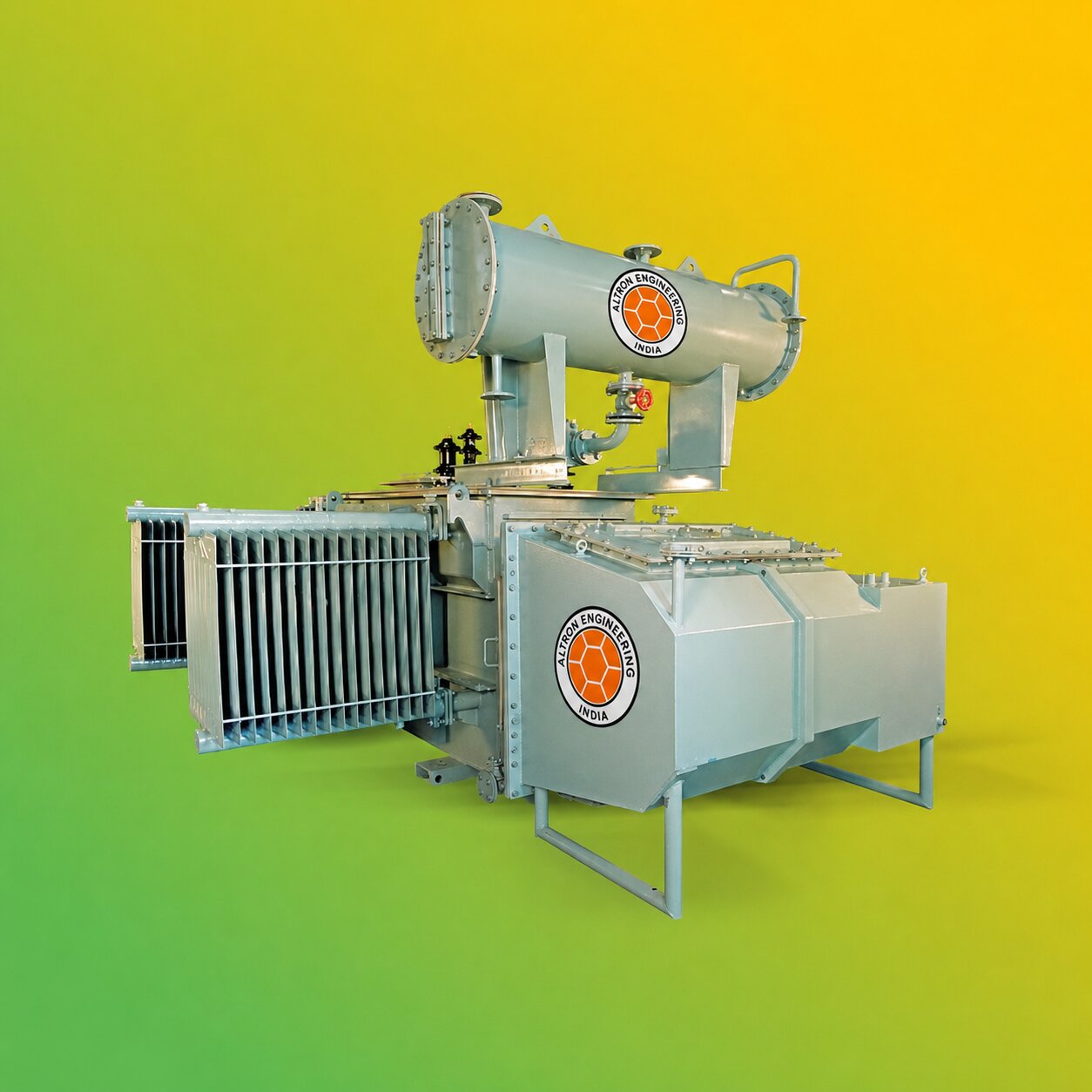
Transformers are an essential component of power systems that use electricity because they transfer electricity from a voltage range to the next. But there are many different types of transformers specifically designed to serve the same purpos. When you compare power transformers and distribution transformers, principal distinctions can be observed in their uses, capacities and operating conditions, voltage levels, as well as the efficiency requirements for places of installation. Though both types of transformers operate in the same way, based on the concept of inductive electromagnetic energy, the two types function at different phases of the power system. In this article we will go over the power transformer distinction in detail. We will also explain the power transformer and distribution transformer differences in depth to assist you to determine which transformer is best suited for various electrical purposes.
What Is a Power Transformer?
The power transformer can be described as a powerful transformer used primarily in power transmission networks and generation stations as well as high-voltage substations.
It is specifically designed to transfer huge quantities of power electrically efficiently between high-voltage electrical systems.Power transformers are typically used for:
- Increase the voltage to allow long-distance transmission
- Reduce the voltage at substations for transmission
- Connect the various segments of the electrical grid
- Control electrical loads with high voltage
- Provide support for utility and industrial power systems.
Since they are essential components of the power grid, power transformers are built with particular requirements for insulation, efficiency, and reliability, along with cooling and voltage management.
What Is a Distribution Transformer?
The distribution transformer is usually utilised to complete the final phase in an electric distribution system.
Its main function is to lower the voltage to a level that is acceptable to supply electricity to customers as well as smaller commercial or industrial loads.
Distribution transformers can be located:
- On the utility distribution networks
- Near residential zones
- Near commercial structures
- At industrial facilities
- In electrical poles, or in substations
- Near end-use electrical loads
Their design is heavily focused on efficient operation in the face of varying loads since distribution transformers could remain powered continuously.
Power Transformer vs Distribution Transformer: At a Glance
The most straightforward way to comprehend power transformers and distribution transformers is to examine their main attributes.
|
Parameter |
Power Transformer |
Distribution Transformer |
|
Principal function |
Power transfer and transmission with high capacity. |
Final-stage voltage distribution |
|
A typical place |
Transmission substations and power plants |
Substations for distribution and close to consumers |
|
Capacity |
The average is higher. |
Generally, lower |
|
Voltage |
Usually, the rates are higher. |
Usually, the lower |
|
Loading |
Most often, they are designed around greater or close-rated load conditions. |
Often, the operation is characterised by different loads. |
|
Focus on efficiency. |
High efficiency even at higher operating loads |
High efficiency throughout the day. |
|
Regulating the voltage |
Generally, less attention is paid to the frequent changes in load. |
It is important due to changing consumer demands. |
|
Cooling |
Often, advanced cooling systems are used to provide higher ratings. |
It depends on the size of the transformer and design. |
|
Common users |
Large industrial facilities and utilities |
Utilities, industrial and commercial users |
1. Difference in Application
A very crucial aspect of a power transformer comparison between distribution transformers and power transformers is their place within the electrical network.
Power transformers are usually employed in power generation and transmission, or in high-voltage substations. They are responsible for moving massive amounts of electrical power effectively throughout the network.
Distribution transformers are utilised close to the end-user. They lower voltages from distribution-level values to a level suitable for commercial, residential, and smaller industrial loads.
Thus it is evident that, therefore, the Transformer applications of the two categories differ even though their working principle is the same.
2. Difference in Capacity
Capacity is a major power transformer variation.
Power transformers are typically manufactured for power ratings that are higher since they are utilised in industrial and large-scale transmission systems.
Distribution transformers usually have lower ratings due to the fact that they are intended to provide localised loads.
But there isn't a one-size-fits-all boundary that divides them. The classification of transformers depends on the particular electrical system and its manufacturer standards, as well as the application.
3. Difference in Voltage Levels
The voltage level is a crucial aspect to consider when analyzing the distribution transformer's differences.
Power transformers are usually used in high-voltage generation and transmission systems. They can change the voltage according to their location in the grid. Distribution transformers typically reduce the voltage of distribution to levels that are suitable for the end-users.
For instance distribution networks may utilize a transformer to lower medium voltage into a low-voltage supply that is suitable for commercial and residential use.
4. Difference in Efficiency
Both types of transformers are designed to run efficiently, but they are determined by the way they are utilized. Power transformers are usually utilized at their maximum load during critical transmission or generation times. The efficiency of their operation is evaluated under the appropriate load conditions.
Distribution transformers are able to remain powered for prolonged periods even if the load is quite low. Therefore, reducing no-load loss or losses to the core is incredibly essential for the design of distribution transformers.
The difference in operating patterns is a major factor in an overall power transformer and distribution transformer comparison.
5. Difference in Load Conditions
Power transformers are typically used in large-scale power networks, where the load profile is controlled in accordance with transmission and generation demands. Distribution transformers face varying loads throughout the day.
For instance the distribution transformer that supplies the residential areas could experience:
- Lower demand during certain daytime hours
- Demand is increasing in the evening.
- The seasonal changes in electricity consumption
- The short-term high demand periods are often during the summer.
This is why load behavior is an important factor to take into account when comparing the two types of transformers.
6. Difference in Voltage Regulation
Regulating voltage refers to the variation in output voltage when the load on transformers alters.
Distribution transformers require good voltage regulation since they serve the end-users with electrical loads that could change dramatically. A significant alteration in the load can impact the voltage that is delivered to consumers.
Power transformers, especially those in transmission substations utilize specialized voltage control equipment like tap changers to regulate the voltage of the system in accordance with the requirements of the network.
7. Difference in Cooling Systems
The arrangement of cooling depends on the design, rating of the transformer and its application.
Power transformers with large power capacities may need sophisticated cooling equipment in order to eliminate the heat produced through their cores and windings.
The systems could comprise:
- Radiators
- Fans
- Oil circulation
- Pumps
- Heat exchangers
Smaller distribution transformers may use simpler cooling arrangements.
So, cooling requirements could be a further power transformer variation in particular when comparing large utility transformers and less compact distribution units.
8. Difference in Installation Location
Installation location is a simple method to differentiate between the two.
Power transformers are usually located at:
- Power generation plants
- Grid Substations
- Substations for transmission
- Large industrial facilities
Distribution transformers are typically placed closer to the consumers, like:
- Substations for distribution
- Utility poles
- Commercial premises
- Residential zones
- Industrial distribution systems
The place of their location is a reflection of their roles within their respective roles within the network of electricity.
9. Difference in Cost and Size
Power transformers tend to be bigger and more complicated than distribution transformers due to the fact that they are specifically designed for high-capacity applications.
Their design may include larger cores, a greater amount of than one winding material, more sophisticated cooling systems, high-end protection equipment and accessories.
Distribution transformers tend to be smaller and easier to use, however their cost and size will vary greatly based on their ratings and the design.
When looking at a power transformer or distribution transformer, cost should be taken into consideration along with voltage, capacity efficiency, installation requirements and the expected operating conditions.
10. Difference in Maintenance
Maintenance requirements are based on transformer configuration and conditions of operation.
Large power transformers need extensive maintenance programs since an unplanned malfunction could affect a large component of the electrical system.
Maintenance can comprise:
- Tests for insulation
- Test of oil in transformers
- Inspection of the bushing
- Monitoring of temperature
- Inspection of cooling system
- Tests of protection systems
- Testing electrical
- Monitoring of the condition
Distribution transformers require maintenance and inspection, however the way to maintain them differs depending on the size, location and significance within the distribution system.
Power Transformer vs Distribution Transformer: Which One Is Better?
There is no definitive answer as to which one is the best. The best choice is based on the purpose of the application.
The use of a Power transformer is typically more appropriate for projects that involve:
- Transmission of high voltage
- Power generation
- Grid Substations
- Large-scale power transfer
- Industrial systems that are high-capacity
Distribution transformers are generally suitable when: distributor transformer is typically suitable if the need is:
- Local distribution of power
- Commercial buildings
- Residential zones
- Medium- and low-voltage power supply
- Localized industrial loads
The aim is not to pick"the "better transformer but to choose the transformer that best matches the electric system.
Power Transformer vs Distribution Transformer: Transformer Applications
Transformer applications of both types. application of transformers for both kinds cover a vast spectrum of industries and infrastructure projects.
Power Transformer Applications
Power transformers are often employed in:
- Power generation plants
- Substations for transmission
- Grid interconnection projects
- Large industrial plants
- Renewable energy projects
- High-voltage electrical systems
Distribution Transformer Applications
Distribution transformers are often employed in:
- Distribution of electricity to residential customers
- Commercial buildings
- Industrial distribution networks
- Substations for utilities
- Infrastructure projects
- Local power supply systems for power
Knowing these functions helps make the distinction between distribution transformers more easily to spot.
Power Transformer vs Distribution Transformer: Key Takeaways
The most significant differences could be summarized in the following manner:
- The power transformer is typically used for transmission and generation, while distribution transformers are used to serve the last stages of distribution.
- Capacity The power transformers typically have greater ratings, whereas distribution transformers are specifically designed to handle localized loads.
- Voltage The majority of power transformers manage higher voltages Distribution transformers decrease the voltage of distribution for users.
- Load profile The power transformer is usually linked to large-scale loads on networks and distribution transformers are subject to higher levels of consumer demand.
- Performance: Power transformer efficiency is crucial at their operational load, and distribution transformer design places a lot of importance on reducing losses during extended periods of energization.
- Installation The power transformers usually located in major substations and power plants Distribution transformers are located nearer to the consumers.
Conclusion
Knowing the difference between the difference between a distribution and power transformer is essential when selecting the right equipment for your electric power source.
The power transformer was usually intended for power generation of high capacity transmission, grid, and grid applications. distribution transformers are primarily used to provide power at a voltage that is suitable to localized loads and consumers.
The difference between the power transformer in addition to the distribution transformer differences is primarily connected to their use capacities and loads, voltage levels, efficiency requirements, and places of installation.
The selection of the correct transformer is a careful assessment regarding the transformer's power, voltage capacity and requirements for cooling, and the relevant standards.
For power generation, industrial and renewable energy as well as electrical infrastructure needs, selecting an experienced transformer manufacturer will aid in ensuring the reliability and efficiency of your operation.
To learn more about transformer solutions and products, visit Altron Limited at https://www.altronlimited.com/.

