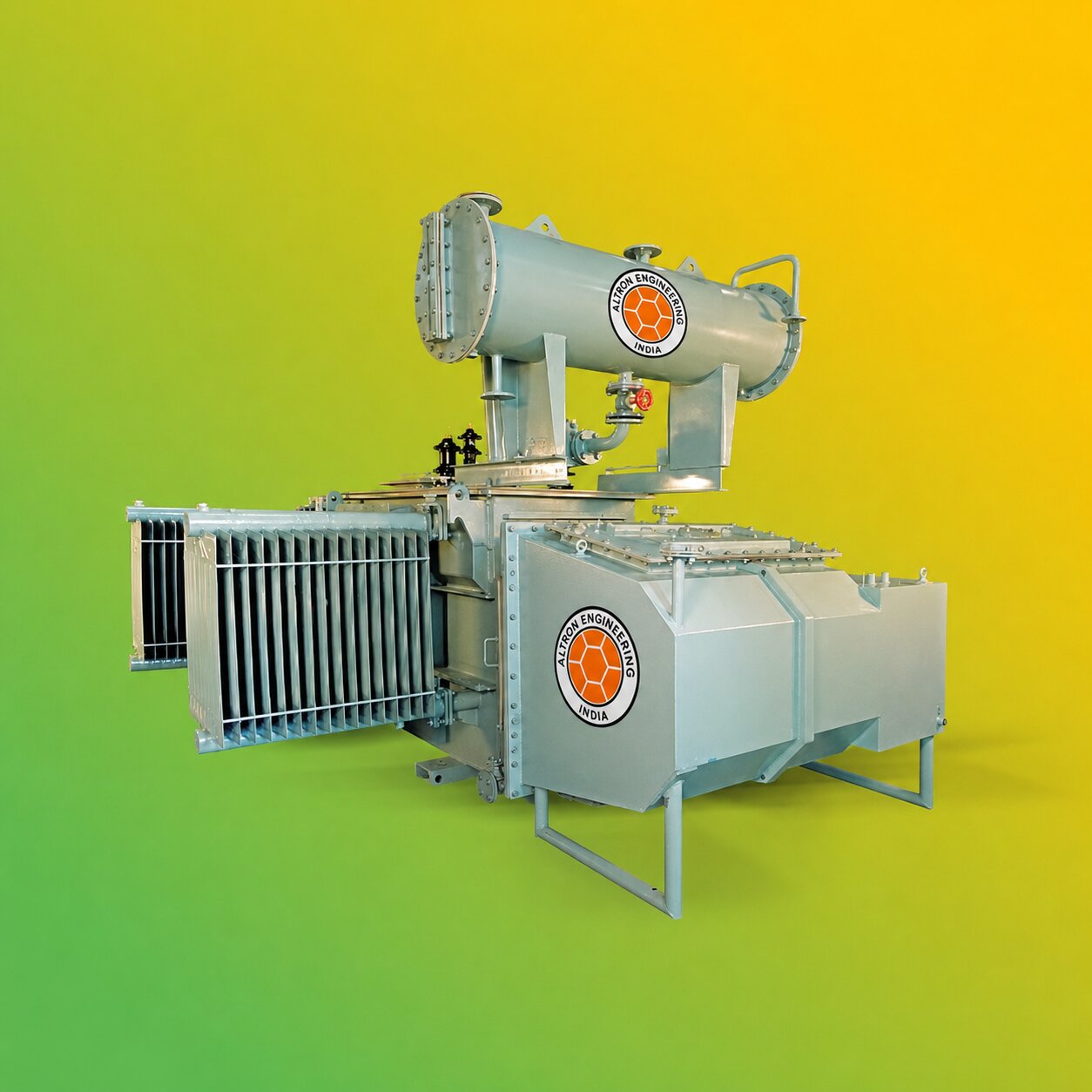
Power transformers are a vital component of modern industrial and electrical systems. They transfer electricity between circuits and supply the voltage levels needed to run various functions. But there are many different transformers specifically designed to meet the requirements. Based on the voltage requirement as well as the load characteristics, cooling process, installation environment and industrial applications, the various designs of transformers are employed. Understanding the various types of power transformers will help companies, electrical contractors and project engineers choose the appropriate transformer to meet their needs in terms of power. In this article we will discuss the most common types of power transformers as well as their characteristics and their use in different industries as well as electrical infrastructure.
What Are Power Transformers?
The power transformers are equipment that are designed for the transfer of AC electric energy between circuits and the next and then alter the voltage according to the need. They are typically used in power plants, substations and manufacturing facilities and renewable energy projects and in large electrical networks.
The correct transformer will depend on a variety of factors, including:
- Rating of voltage
- Power capacity
- The characteristics of a load
- Requirements for cooling
- Installation environment
- Insulation system
- Application
- Operating conditions
This is the reason understanding the various types of power transformers is crucial prior to deciding on a power transformer to be used in an industrial application.
Major Types of Power Transformers
There are a variety of methods to classify transformers. They can be classified in accordance with their purpose as well as their construction, cooling technique and insulation system and applications. Here are a few of the most frequently used power transformers in electrical and industrial applications.
1. Step-Up Power Transformer
A step-up transformer boosts both sides of its circuit.
They are typically employed in power production facilities. The electricity generated by a power plant might require a boost to a higher power level prior to being sent across long distances.
Applications
Step-up transformers are typically employed in the following:
- Thermal power plants
- Hydroelectric power plants
- Solar power plants
- Wind power projects
- Grid-connected generation systems
- Substations for transmission
By increasing the voltage and decreasing the current needed for the energy transfer process, the step-up transformers make long-distance electricity transmission more efficient.
2. Step-Down Power Transformer
A step-down transformer decreases the voltage from a high level to a lower one.
These transformers are usually located at substations in which grid or transmission voltages need to be reduced prior to electricity flowing into infrastructure for distribution or factories.
Applications
Common applications include:
- Substations for transmission
- Industrial plants
- Commercial facilities of a large size
- Electrical distribution systems
- Infrastructure projects
The voltage reduction required is dependent upon the electric system used and the load that is connected.
3. Oil-Immersed Power Transformer
Oil-immersed transformers employ an insulating liquid to provide heating transfer and electrical insulation.
The insulating oil encases the active components and helps to eliminate heat that is generated when the components are operating. Fans, radiators, pumps or any other cooling arrangement could be utilised depending on the transformer's rating and the design.
Advantages
Oil-immersed transformers are able to provide the following:
- Effective cooling
- High insulation performance
- High-capacity applications
- Reliable operation in demanding environments
Industrial Applications
They are frequently employed in:
- Substations for power
- Manufacturing plants
- Steel industries
- Cement plants
- Chemical industries
- Power systems for utilities
- Large infrastructure projects
4. Dry-Type Power Transformer
Dry-type transformers don't use liquid insulation. Instead, their windings are protected by solid insulation material, and heat is dissipated via air or some other suitable cooling system.
They can be especially useful in situations where indoor installation and fire safety requirements or environmental considerations affect the choice of transformer.
Applications
Dry-type transformers are used in the following:
- Commercial buildings
- Manufacturing facilities
- Hospitals
- Data centers
- Industrial plants
- Metro and the transportation infrastructure
- Installations of electrical power in the indoor environment
The potential of a dry-type transformer is based on its ratings, design, ventilation, and the installation conditions.
5. Furnace Transformer
Furnace transformers are special transformers that are designed specifically for use in industrial furnaces.
Electric furnaces require large currents as well as specific voltage characteristics. The transformers for furnaces are designed to meet the requirements of the electrical power of furnaces.
Applications
They are frequently connected to industries like the following:
- Steel manufacturing
- Processing of metal
- Foundries
- Ferroalloy plants
- Smelting operations
- Heavy manufacturing
A well-designed furnace transformer is able to withstand the challenging electrical conditions associated with industrial furnace operation.
6. Solar Duty Transformer
The growing demand for renewable energy has led to a demand for transformers specifically designed for solar power installations.
Solar duty transformers are utilised to convert electrical energy produced by photovoltaic systems into suitable voltage levels to be used for transmission, collection, and grid connections.
Applications
They are frequently employed in:
- Solar power plants that are utility-scale
- Solar parks
- Grid-connected photovoltaic power projects
- Substations for renewable energy
- Commercial solar installations
These transformers are chosen according to factors like power rating and voltage and the environmental conditions as well as the operating characteristics of the solar project.
7. Distribution Transformer
Distribution transformers are connected to the end-user's part in the electric network.
Their primary purpose is to lower the voltage of distribution to a level that is appropriate for commercial, residential, and industrial loads.
Applications
Distribution transformers are typically used in:
- Residential zones
- Commercial buildings
- Industrial estates
- Local Substations
- Networks for distribution of utilities
Although distribution transformers are distinct in comparison to high-capacity transmission power converters, they are an integral element of the entire electricity system.
8. Generator Transformer
Generator transformers are installed between a power generator and a grid or transmission network.
The generator generates electricity at a specific voltage. The generator transformer raises that voltage to the amount required to transmit.
Applications
Generator transformers are typically employed in:
- Thermal power plants
- Hydroelectric stations
- Renewable energy production facilities for energy
- Power projects of large utility scale
They are essential elements in connecting power generation equipment to the electric grid.
9. Auto Transformer
An autotransformer makes use of one winding that is common to both the output and input circuits, rather than having separate secondary and primary windings.
This type of arrangement can be beneficial for certain voltage transformation applications, such as having less size and material requirements when compared to traditional transformer configurations.
Applications
Autotransformers can be utilised to:
- Regulating voltage
- Motor start
- Electrical systems for industrial use
- Grid applications
- Specialized voltage conversion
Their usage is contingent upon the voltage ratio required as well as isolation requirements, capacity, and design of the system.
How Are Power Transformer Types Selected?
The selection of different power transformers requires a thorough comprehension of a project's electrical and operational specifications.
Voltage Requirement
The voltages at the input and output levels determine the fundamental transformation requirements.
Power Rating
The transformer should be able to handle the expected electrical load without exceeding its electrical or thermal limitations.
Load Characteristics
Industrial loads can be intermittent, continuous and fluctuating or demanding. The transformer to be selected in accordance with the load profile.
Installation Environment
Outdoor and indoor installations may require different specifications in relation to temperature as well as humidity, ventilation, fire safety, dust and the space available.
Cooling Requirement
Transformers with higher capacities generally require more advanced methods of dissipating heat.
Insulation Requirement
The insulation system has to be suitable for operating voltage, the environment temperature, and the expected electrical stress.
Application
The most crucial thing to consider is the specific use. A solar transformer generation might require different specifications than one intended for electric furnaces or transmission substations.
Industrial Applications of Power Transformers
The various transformer applications cover nearly every major industry that is dependent on dependable electric power.
Steel Industry
Steel plants require huge quantities of electricity for rolling mills, furnaces and motors, as well as other equipment.
Specialised transformers, such as furnace transformers, are utilised to deal with the demands of electrical loads.
Cement Industry
Cement manufacturing requires crushers, mills, conveyors, fans, kilns, as well as other high-power equipment.
Transformers are the primary source of voltages for electrical power in these systems.
Chemical Industry
Chemical processing facilities require steady electric power to power compressors, pumps and motors; heating systems; as well as control equipment and manufacturing processes.
Transformers are an essential part that make up their electricity infrastructure.
Renewable Energy
Wind and solar projects need transformers in order to transform the generated power to grid systems and collection systems.
The solar duty transformer is especially crucial in large photovoltaic installations.
Manufacturing
Factories utilize transformers to provide electricity to machinery for production, including motors, automation systems, lighting, and other equipment.
Power Generation
Transformers are required for power plants to connect generators with the electric transmission system.
Based on the plant's design, different types of transformers can be employed to power generation or auxiliary systems as well as grid connection.
Why Choosing the Right Transformer Matters
Choosing the right transformer is vital for the safety of electrical operations.
A transformer that is not suitable can cause the following:
- Heating too much
- Greater electrical loss
- Poor voltage performance
- More frequent maintenance requirements
- The equipment's life expectancy is decreased.
- Unexpected downtime
The correct transformer must be chosen based on the technical specifications, not just selecting a transformer that has the capacity of a certain amount.
Engineers should take into consideration the complete operating conditions; anticipated voltage; and load required for cooling, as well as the applicable standards, before deciding on the design of the transformer.
Power Transformer Types: Quick Comparison
|
Transformer Type |
Primary Purpose |
Typical Applications |
|
Step-Up Transformer |
The voltage is increased |
Transmission and power generation |
|
Step-Down Transformer |
Reduces voltage |
Industrial systems and substations |
|
Oil-Immersed Transformer |
High-capacity voltage transformation |
Heavy industries and utilities |
|
Dry-Type Transformer |
The transformation of voltage without liquid insulation |
Commercial and residential installations |
|
Furnace Transformer |
Supplies high-current furnace loads |
Industries of steel and metal |
|
Solar Duty Transformer |
Solar power systems that support it. |
Solar power plants |
|
Distribution Transformer |
Local voltage reduction |
Commercial and residential distribution |
|
Generator Transformer |
Grid connects generators |
Power generation plants |
|
Auto Transformer |
Specialized voltage transformation |
Grid and industrial applications |
Conclusion
The various types of power transformers have been designed to satisfy specific industrial and electrical demands. From step-up and step-down transformers to furnaces, solar-duty dry-type, oil-immersed and distribution transformers, each type has its own purpose within the electrical system.
Understanding the different types of power transformers can help industry professionals select equipment that is suitable for the voltage, capacity loads, load characteristics, installation conditions and needs.
A good transformer will help in efficient power transfer and reliable operation, as well as effective voltage management and enhanced electric system efficiency.
For power-sector and industrial projects, the choice of transformers should be determined by precise technical requirements as well as the operational requirements of the project.
To explore transformer solutions for industrial and electrical applications, visit Altron Limited at https://www.altronlimited.com/.

