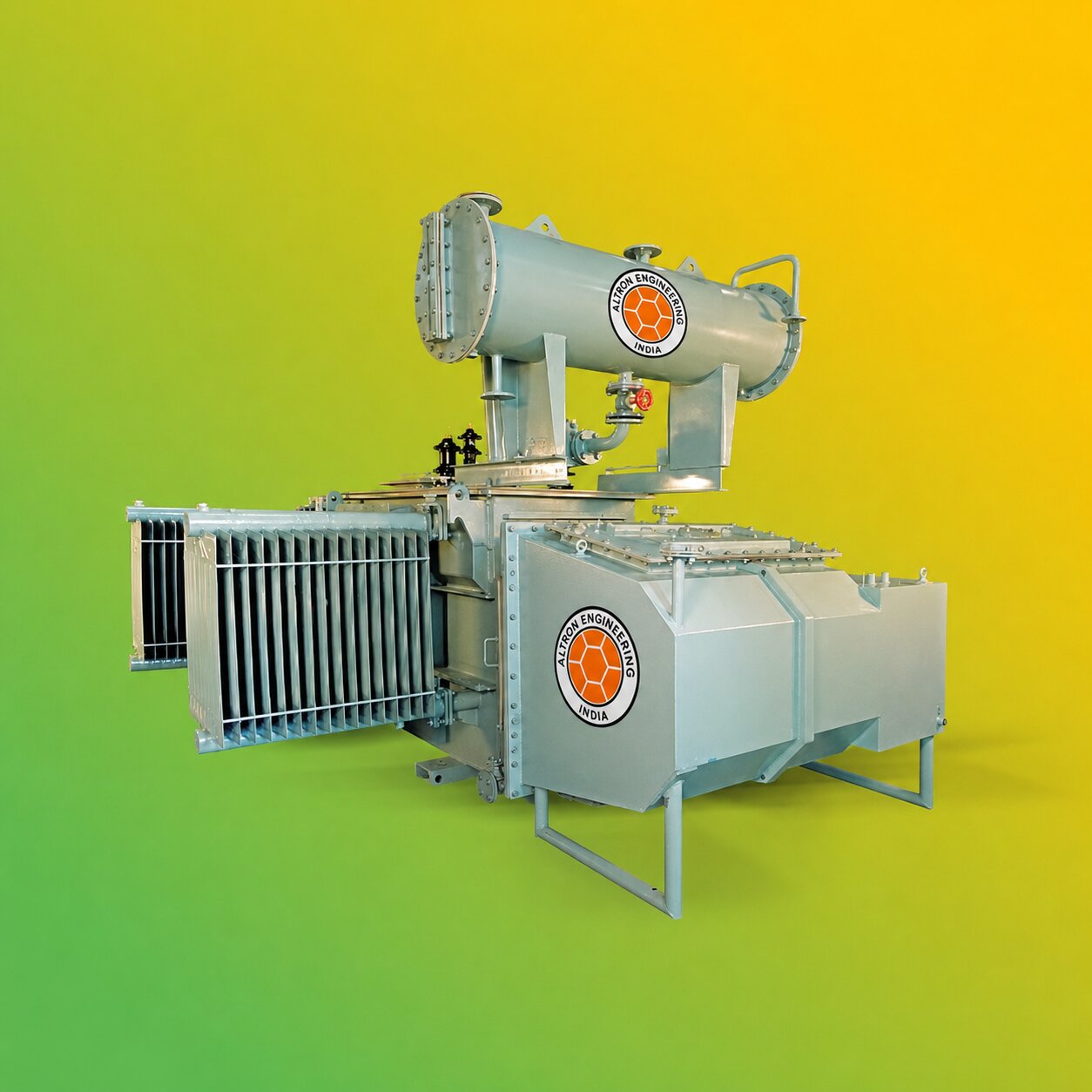
The power transformer can be described as an important electrical device utilized in the power generation, transmission and distribution system. It is a device that transfers electricity between circuits by means of electromagnetic induction, while also changing the voltage to meet the needs in the system of electrical power. Power transformers play a crucial part in enhancing the effectiveness and reliability of transmission of electricity. They are extensively used in power plants, substations factories and renewable energy projects as well as large commercial facilities. In this article we will learn the meaning of a power converter, what it is, how a power transformer functions, the various kinds of power transformers, as well as their most important applications.
What Is a Power Transformer?
Power transformers are an electrical device used to transfer electric energy between circuits with the same rate while simultaneously increasing or reducing the voltage levels.
Power is created at a specific voltage, and transferred over long distances using a higher voltage, thereby reducing transmission losses. Substations have transformers that reduce the voltage to levels suitable for distribution, commercial or industrial use.
An ordinary power transformer is comprised of:
Primary winding
Secondary winding
Magnetic core
Insulation system
Transformer oil or another cooling medium, based on the layout
Terminals and bushings
Systems for protection and cooling
The choice of a transformer will depend on factors like the voltage level and load capacity, the installation as well as operating environment.
How Does a Power Transformer Work?
The principle of operation of the power transformer is based upon Faraday's law that describes electromagnetic induction. In the event that an oscillating current runs across the main winding it creates a fluctuating magnetic flux within the transformer's core. The fluctuating magnetic flux is linked with the secondary winding, and produces the electromotive force (EMF) within it. The voltage relation between the main and the secondary winds will depend heavily on the numbers of rotations.
Step-by-Step Working of a Power Transformer
1. AC power is introduced Into the primary winding. Alternating voltage will be applied to the main winding.
2. Magnetic flux is created The current causes a change in the magnetic field within the transformer's core.
3. Links of Flux with the secondary winding The magnetic flux flows through the core before connecting to the second winding.
4. The voltage can be induced The change in magnetic flux creates tension in the secondary winding.
5. The voltage is either increased or decreased. Depending on the winding rate the transformer may alter the voltage.
A transformer that has more turns on the secondary winding than on the primary winding is typically referred to as a step-up transformer. However, those with less secondary turns are known as step-down transformers.
Step-Up and Step-Down Transformers
A step-up power converter increases voltage and is employed to power the transmission system. Increased voltage allows electricity to be transferred over long distances, with less loss and less current.
A step-down power transformer lowers voltage to levels that are appropriate for distribution systems, industrial equipment and various electrical devices.
Main Types of Power Transformers
There are various types of transformer designs and each one is chosen according to the operating and electrical needs of the project.
1. Step-Up Power Transformer
Step-up transformers raise in voltage, moving from generator level to a greater transmission voltage.
They are usually installed at power production facilities prior to electricity being introduced into high-voltage transmission networks.
Applications can include:
Power generation plants
Substations for transmission
Renewable energy projects
Grid-connected electrical systems
2. Step-Down Power Transformer
Step-down transformers cut the voltages used for transmission to levels that are less needed by distribution networks as well as industrial installations.
They are typically used in substations as well as large industrial facilities.
3. Distribution Transformer
Distribution transformers serve to lower voltage to levels suitable for the end-users. They are usually found near commercial, residential, as well as industrial installations.
While power transformers and distribution transformers share the same transformer function of voltage transformation however their designs specifications, ratings, efficiency specifications and operating conditions may differ.
4. Oil-Immersed Power Transformer
Oil-immersed transformers make use of insulating oils to provide electrical insulation and heat dissipation.
The oil absorbs the heat created during operation and then transfers it to the cooling process. They are commonly utilized in large-capacity electrical installations.
5. Dry-Type Transformer
Dry-type transformers do not employ liquid insulation. Instead, they depend upon solid insulation, some other cooling techniques.They are suitable for indoor installation such as commercial buildings, industrial installations, and other locations in which the use of liquid insulation must be limited.
6. Furnace Transformer
Furnace transformers are specifically designed to be used in applications that require a large current and certain voltage specifications.
They are frequently used in industries like:
Steel manufacturing
Processing of metal
Foundries
Electric furnace operation
The design of their products is optimized for the most demanding industrial load and operating conditions.
7. Solar Duty Transformer
The solar duty transformers were made to be used in the solar energy generation system. They aid in the transfer of electricity generated by solar power plants into suitable voltage levels to collect it and for grid connection.
These transformers form an integral element of solar panels for utility-scale and renewable infrastructure for energy.
Power Transformer Applications
Power transformer applications are spread across a variety of industries and electric infrastructures.
Power Generation
Power transformers are installed inside power plants to increase the voltage prior to electricity being transmitted via high-voltage networks.
They are employed in many generation systems, such as:
Thermal power plants
Hydroelectric power plants
Solar power plants
Wind power projects
Other generation facilities that are utility-scale
Transmission and Distribution
High-voltage transformers are an essential part of electrical distribution and transmission networks.
They increase the voltage needed for effective long-distance transmission, and then reduce the voltage at distribution substations.
Industrial Facilities
Large industrial facilities require reliable electric systems for machines, motors, furnaces production lines, and other equipment.
er transformers are able to provide the necessary voltage levels required by massive electrical loads.
ustries like steel, manufacturing chemicals, cement, infrastructure, and metals may utilize transformers that are specially designed according to their power needs.
Renewable Energy Projects
The growing demand for wind and solar power has led to a greater demand for transformers that are designed specifically to work with renewable energy sources.
Transformers for solar power, such as can help to integrate the electricity generated by photovoltaic systems into electric transmission and collection networks.
Commercial and Infrastructure Projects
Data centers, airports, hospitals, transport infrastructure, as well as other facilities might require transformers to control electric distribution networks.
Why Are Power Transformers Important?
Power transformers are vital to ensuring the reliability of an electrical power grid.
The main benefits are:1. Reduced Transmission Losses
Electricity can be transferred at higher voltages as well as less currents, which helps reduce resistance losses on transmission lines.
2. Efficient Voltage Conversion
Transformers enable you to convert electricity between various voltage levels, without changing the frequency.
3. Support for Large Electrical Loads
Industrial facilities typically require large capacity electrical systems. The right transformers are able to supply the required loads with efficiency.
4. Grid Reliability
Transformers are essential components of electrical grids and substations that help maintain the proper voltage levels across the power grid.
5. Support for Renewable Energy
Specialized transformers are used to join renewable generation power systems with electrical grids as well as collection networks.
Factors to Consider When Selecting a Power Transformer
Selecting the correct transformer is a careful assessment of both environmental and electrical conditions.
The most important factors are:
- Rated capacity of power
- Secondary and primary voltage
- Frequency
- Transformer type
- Method for cooling
- Installation location
- The requirements for insulation
- Characteristics of the load
- Efficiency
- Capacity to withstand short-circuits
- Conditions of the environment
- Maintenance needs
- Applicable electrical standards
For utility and industrial applications, the choice of transformer must be based on specific specifications for electrical power and the expected operating conditions.
Power Transformer vs Distribution Transformer
Distribution transformers and power transformers both are used to transform voltage, however they are typically designed for different components of an electrical system.
| Feature | Power Transformer | Distribution Transformer |
|---|---|---|
| Principal Goal | Used for high-voltage transmission and large-scale power systems | Used for final-stage power distribution to consumers |
| Typical Installation | Installed in substations and power plants | Installed near consumers and within distribution networks |
| Capacity | Generally has a higher power capacity | Generally has a lower power capacity |
| Operating Conditions | Designed for heavy-load and high-voltage operation | Designed to handle varying distribution loads |
| Application | Used in substations, transmission systems, and power generation | Used for industrial, residential, and commercial power distribution |
The precise specifications may differ according to the transformer's design and project.
Maintenance of Power Transformers
Regular maintenance is essential for maintaining the performance of transformers and prolonging the life of the transformer.
Depending on the transformer's design The maintenance tasks could comprise:
- Examining the condition of insulation
- Examining connections and bushings
- Monitoring the temperature of transformers
- Examining the condition of oil in transformers with oil-immersed components
- Inspecting cooling systems
- Testing protection equipment
- Examining for unusual noises or vibration
- Conducting electrical tests at suggested intervals
Maintenance that is preventive can detect potential issues prior to them causing expensive failures or sudden downtime.
Conclusion
Power transformers are an essential element of contemporary electrical systems. Through the transfer of electrical energy through circuits and shifting voltage levels, they make huge-scale electrical generation and transmission distribution and industrial usage more efficient and feasible.
Understanding the working principles, the various types of power transformers, as well as power transformer application is essential when choosing the appropriate transformer for your project.
For the power and industrial needs selecting a transformer made by an experienced manufacturer can ensure proper performance along with reliability and long-term performance.
Altron Limited provides transformer solutions for electrical and industrial applications. To learn more about its transformer products and solutions, visit the official website: https://www.altronlimited.com/

